Everyone got the headline wrong.
When ChatGPT launched in late 2022, a familiar panic spread across American newsrooms, LinkedIn feeds, and dinner tables: AI is going to take our jobs. Financial analysts predicted mass unemployment. Hollywood writers went on strike. Radiologists started updating their resumes. And for a while, it felt like the robots were finally, actually coming.
Fast forward to early 2026, and the unemployment rate in the United States sits at levels economists consider historically normal. White-collar workers are still employed. Your accountant still answers your calls. Your marketing team is still arguing about font choices in Slack.
But something did change — quietly, structurally, and in ways that most people are only beginning to understand. The thing that changed is called agentic AI, and it is reshaping American work in a way that is far more subtle, and honestly far more interesting, than simple job replacement.
This is not a story about robots stealing paychecks. It is a story about something much harder to articulate: the slow hollowing-out of judgment from the American professional class — and what that means for your career, your industry, and your income in 2026 and beyond.
What Agentic AI Actually Means
Most people who have used AI tools like ChatGPT, Claude, or Gemini are familiar with the chatbot model: you ask a question, you get an answer, you move on. That is called generative AI, and while it was impressive, it was fundamentally passive. It waited for you.
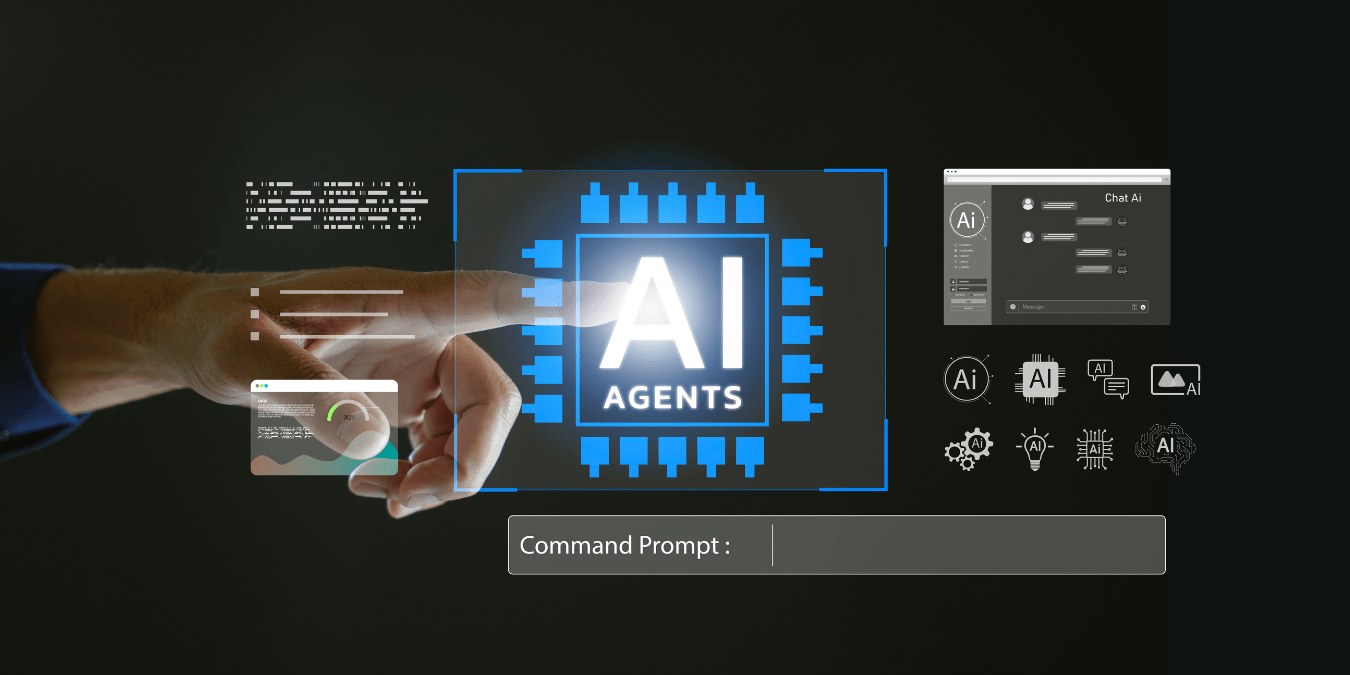
Agentic AI is different. An AI agent does not wait. It acts.
Think of the difference between hiring a research assistant who answers your questions versus hiring a chief of staff who reads your calendar, anticipates your needs, sends emails on your behalf, books your flights, compiles reports, and follows up with your clients — all without being asked for each individual task.
That is what AI agents do. They are systems designed to pursue goals autonomously, breaking complex objectives into sub-tasks, using tools like web browsers, code interpreters, and APIs, and completing multi-step workflows with minimal human input.
In 2025, companies like OpenAI, Anthropic, Google DeepMind, and Microsoft all launched serious agentic products. Salesforce deployed AI agents inside enterprise CRM pipelines. Klarna publicly stated its AI handled the workload of hundreds of customer service representatives. Law firms began piloting agents that could draft, review, and file routine documents end-to-end.
By early 2026, agentic AI is no longer a prototype. It is in production. And the industries feeling it first are not the ones most Americans expected.
The Jobs Not Being Replaced — Yet
Here is where the narrative gets complicated, and where most media coverage falls apart.
Agentic AI is not replacing jobs in the dramatic, cinematic way people imagined. You will not wake up one morning to find that your company replaced your entire department overnight. What is happening instead is quieter and, in some ways, more corrosive to economic security.
Companies are not firing people because of AI agents. They are not hiring new people because of them.
This is a critical distinction. When a mid-sized law firm in Chicago that would have hired six paralegals in 2023 now hires two — and deploys AI agents for the rest — those four jobs are not destroyed. They simply never appear. They do not show up in unemployment statistics. They do not generate a headline. But they represent real income that real people never earned, real experience they never gained, and real career ladders that quietly lost a bottom rung.
This pattern is showing up across American industries in 2026:
- Entry-level financial analysis roles at investment firms are seeing reduced headcount, with AI agents handling earnings report summaries, competitor analyses, and preliminary valuation models
- Junior copywriters and content coordinators at marketing agencies are facing a hiring freeze, even as senior creative directors see increased demand
- Healthcare administration — coding, billing, prior authorization — is being automated at a pace that is outrunning new position creation
- IT support tiers one and two at large corporations are contracting, with agentic systems resolving the majority of tickets before a human even sees them
The people losing out are not mid-career professionals with deep expertise and institutional relationships. They are new entrants to the workforce, career changers, and workers in the first three to five years of building their skills. And in the United States, where so much professional identity, health insurance, and financial stability is tied to employment, that is a serious structural problem.
- Treasury Yields Drop to 4.25% as War Fears Ease — What Lower Yields Mean for Homebuyers, Banks, and Your 401(k) in 2026
- Kevin Warsh vs. Senator Warren: Why the Fed Chair Confirmation Hearing Is Rattling Bond Markets and Spooking Investors

- UnitedHealth, GE Aerospace, 3M, and RTX All Reported Earnings This Week — Here’s Who Won and Who Shocked Wall Street

- Why Did Ceasefire Talks Halt the Stock Market Rally on April 20–21, 2026 — And When Could It Restart?

- Bitcoin Above $76,000 and Climbing: Is Crypto Quietly Becoming the Safest Bet in a War-Rattled U.S. Market?

- Netflix Drops Nearly 10% After Earnings Shock and Co-Founder Reed Hastings Announces Departure After 29 Years — Is It Time to Sell?

The New Shape of Professional Value
If agentic AI handles the execution of routine cognitive tasks, what exactly does a human professional bring to the table in 2026?
This question is not rhetorical. It is the most important career question you can ask yourself right now, and the honest answer requires confronting something uncomfortable: for decades, a significant portion of white-collar work in America has been well-compensated task execution dressed up as expertise.
Filling out forms. Writing boilerplate contracts. Generating standard reports. Building spreadsheets from templates. These activities are valuable, they require training, and they have supported middle-class careers. But they are not, at their core, exercises in judgment or creativity. They are exercises in reliable execution of defined processes.
AI agents are extraordinarily good at reliable execution of defined processes. They do not get tired. They do not make the kind of small errors that come from a distracted afternoon. They do not need benefits. And in 2026, they are getting dramatically better at navigating the ambiguity and edge cases that used to require human intervention.
So what does that leave for humans?
Based on the patterns emerging across American industries, the professionals who are thriving — not just surviving, but genuinely advancing — share a few characteristics:
They exercise judgment in genuinely ambiguous situations. An AI agent can draft a settlement agreement, but it cannot assess whether a client’s emotional state means this is the wrong moment to settle. A senior therapist, a skilled negotiator, a seasoned nurse — they bring contextual human judgment that no current agent can reliably replicate.
They hold relationships as their primary asset. The sales professional whose clients trust them personally, the consultant whose reputation precedes them, the architect whose vision clients have followed for twenty years — these professionals are not competing with AI agents. They are directing them.
They understand how to deploy, oversee, and improve AI systems. Across every sector, the fastest-growing slice of the American labor market in 2026 is people who can build workflows, evaluate AI output quality, catch errors, and iterate on agentic systems. You do not need to be a machine learning engineer. You need to understand what these systems can and cannot do, and where human oversight is non-negotiable.
They create genuinely novel outputs. Not content for content’s sake — AI can do that endlessly — but ideas, strategies, products, and frameworks that did not exist before. The market for genuine creative and intellectual originality has not declined. If anything, it has appreciated, precisely because mediocre execution has been commoditized.
What American Companies Are Getting Wrong
It would be easy to read this as a straightforward story of technological progress, where the efficient machines handle the drudgery and humans ascend to higher-order work. That is the optimistic framing, and it contains real truth.
But American companies are making a significant error in their deployment of agentic AI, one that is creating risk they have not fully priced in.
They are removing human oversight faster than they are building the systems to replace it.
When a junior analyst reviews a financial model before it goes to a client, they are not just checking math. They are also absorbing institutional knowledge, developing pattern recognition, and building the expertise that will make them a senior analyst in five years. When that review function is handed to an AI agent, the math gets checked — but the learning stops.
The result, playing out right now at firms across the United States, is a growing gap between senior professionals who carry deep expertise built over decades, and junior staff who are proficient at prompting AI tools but have not developed the underlying judgment those tools are supposed to augment.
This is not a hypothetical risk. It is the same dynamic that has played out in aviation, nuclear power, and financial risk management: when humans are removed from routine operations, they lose the situational awareness that makes them effective in the edge cases where human judgment matters most.
Several large American financial institutions have already discovered this quietly in stress scenarios during 2025. When their agentic systems encountered conditions outside their training distribution, the junior staff tasked with escalation did not have the experiential foundation to recognize the problem or respond effectively. Their senior colleagues did — but there were far fewer of them than there used to be.
The Geographic Dimension Nobody Is Talking About
Agentic AI’s impact on American workers is not evenly distributed, and the geographic dimension of this story is significantly underreported.
In major metropolitan centers — New York, San Francisco, Boston, Seattle, Chicago — the labor market for AI-adjacent skills is robust. Salaries for professionals who can design, deploy, and manage agentic workflows have risen sharply. The technology industry’s concentration in these cities means that even non-technical workers have absorbed significant AI literacy through proximity and culture.
But in mid-sized American cities — Columbus, Memphis, Albuquerque, Baton Rouge — the story is different. Industries like insurance processing, back-office financial services, and healthcare administration, which have historically provided stable middle-class employment, are automating at a pace that local labor markets are not equipped to absorb. The alternative jobs being created by the AI economy are concentrated elsewhere, and remote work, while more common than it was five years ago, has not spread AI-economy opportunity as broadly as optimists predicted.
This is not inevitable, but addressing it requires policy responses that are currently moving slowly at the federal and state level. Workforce retraining programs, community college AI curriculum, and targeted economic development in affected regions are all part of the necessary response — and as of early 2026, none of them are moving at the speed the transition demands.
What You Should Actually Do Right Now
If you are an American professional reading this in 2026, the most useful thing is not generalized reassurance or generalized panic. It is a clear-eyed assessment of where your current skills sit relative to what agentic AI can and cannot do, followed by deliberate action.
Here is a practical framework:
Audit your actual work. For one week, track every significant task you complete and ask honestly: could a well-designed AI agent do this if it had access to the right data and tools? The tasks where your honest answer is “yes, probably” are your areas of exposure. The tasks where your answer is “not without understanding things that are genuinely hard to specify” are your areas of durable value.
Invest in AI fluency, not just AI familiarity. Millions of American workers have used ChatGPT. Far fewer have built even a simple agentic workflow, understand how to evaluate AI output quality systematically, or know what “context window” and “tool calling” mean in practice. The gap between those two levels of fluency is where the earnings differential is opening up in 2026.
Rebuild the human skills that got neglected during the remote work era. Negotiation, persuasion, reading a room, building trust over time, leading through uncertainty — these capabilities atrophied for many professionals during the 2020-2023 period, and they are precisely the skills that agentic AI cannot replicate. Invest in them deliberately.
Pay attention to your industry’s specific adoption curve. Legal, financial services, and healthcare administration are ahead of the curve. Construction management, social work, and skilled trades are behind it. Where your industry sits determines your urgency.
Do not wait for your employer to train you. In previous technological transitions, large American employers provided substantial workforce retraining. The speed of the current transition, combined with cost pressures, means that many companies will not prioritize this proactively. Your professional development is your responsibility, and the window to differentiate yourself through AI fluency is open right now — but it will not stay open indefinitely.
The Bigger Question America Needs to Answer
Beyond individual career strategy, the arrival of genuinely capable agentic AI in 2026 forces a policy and cultural reckoning that the United States has been slow to engage.
The American social contract has, for generations, been organized around work as the primary mechanism for distributing both income and dignity. The question that agentic AI raises — not hypothetically, but practically and urgently — is what happens to that contract when a growing portion of the cognitive work that sustained the middle class can be performed by software at a fraction of the cost.
This is not a question with an obvious answer. Thoughtful economists, technologists, and policymakers hold genuinely different views on whether the historical pattern of technological displacement followed by new job creation will hold, or whether something structurally different is happening this time.
What is clear is that the United States needs to be having this conversation at scale, with honesty, and with the same urgency that private companies are bringing to AI deployment. The speed mismatch between corporate adoption and public policy response is the single largest risk factor in the American AI transition — not the technology itself.
The jobs that agentic AI is coming for in 2026 are real. But the way it is coming for them — quietly, through attrition rather than replacement, through capability expansion rather than headcount announcements — means the alarm bells are muted when they should be loud.
Pay attention. The transformation is not coming. It is already here.
This article reflects analysis of publicly available data, industry reports, and workforce trends through early 2026. The author has covered AI and labor market trends for technology and business publications since 2018.