Wall Street has been on a wild ride in 2026 — from a sharp early-year correction to a jaw-dropping 13-session winning streak. If you’re an investor trying to make sense of where the Dow, S&P 500, and Nasdaq are headed next, this is your must-read briefing.
The Big Picture: Where Are Markets on April 20, 2026?
The U.S. stock market is navigating a fascinating inflection point. After the S&P 500 shed roughly 4% in the first quarter amid geopolitical shocks, surging energy prices, and the U.S.–Iran conflict rattling investor sentiment, Wall Street engineered one of its most dramatic recoveries in recent memory. The index surged through the landmark 7,000 level for the first time in history on April 15, capping off a 13-session winning streak fueled by strong Q1 earnings, easing Middle East tensions, and renewed optimism about Federal Reserve rate policy.
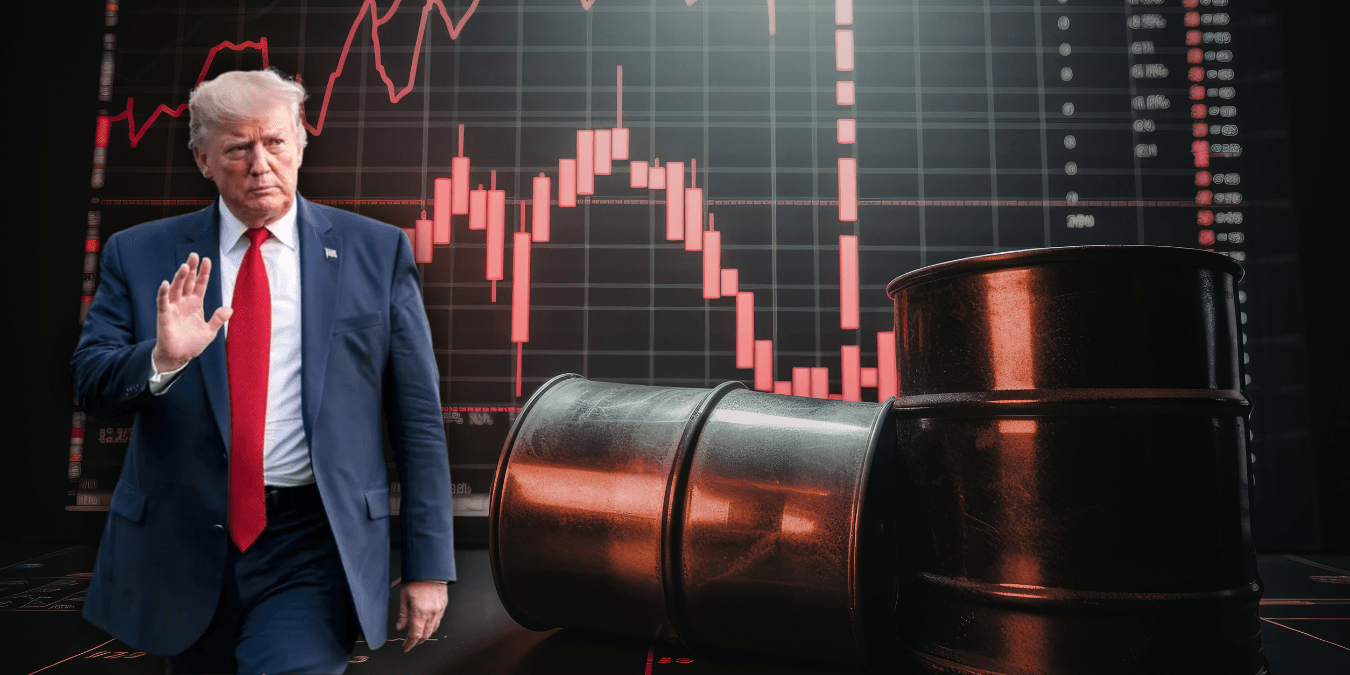
But as April 20 dawns, futures are edging lower. President Donald Trump confirmed on Sunday that the U.S. had fired on and seized an Iranian-flagged cargo ship in the Gulf of Oman, injecting fresh geopolitical anxiety into Monday morning trading. Investors are weighing whether this marks a brief pause in the bull run — or the beginning of a more significant retreat.
Here are the headline index figures heading into this week:
| Index | Level (Apr 17 Close) | Weekly Change |
|---|---|---|
| Dow Jones Industrial Average | 48,578.72 | +0.2% |
| S&P 500 | 7,041.28 | Record High |
| Nasdaq Composite | 17,283 | -10.29% YTD |
| Nasdaq 100 Futures | 26,452.50 | +0.33% (pre-mkt Apr 16) |
The Dow Jones Industrial Average closed at 48,578.72 on April 17, 2026, up 115 points or 0.2% on the day. The S&P 500 printed at 7,041.28, a record closing high, sustaining momentum from Wednesday’s historic first-ever close above the 7,000 mark. The Nasdaq Composite, however, tells a more cautionary tale — it remains down approximately 10.29% year-to-date, weighed by the earlier volatility in high-multiple tech names. Verizon Communications (VZ) was the standout Dow performer on April 17, surging 3.9%.
Investor sentiment, while cautiously optimistic after the record-setting week, remains fragile. The renewed U.S.–Iran confrontation is a live risk that could reprice energy and push CPI even higher in the weeks ahead.
Economic Engines and Headwinds: What’s Driving (and Restraining) the Rally?
Federal Reserve Interest Rates and Monetary Policy
The Federal Reserve remains the single most important variable for U.S. stock market trends in 2026. The Fed currently holds its benchmark federal funds rate at 3.75%, having already delivered a series of cuts from the peak cycle. The Fed’s median projection for the end of 2026 sits at 3.4%, implying at least one additional quarter-point cut this year — but only if inflation cooperates.
Fed policymakers revised their 2026 GDP growth forecast up slightly to 2.4% (from 2.3% in December), while simultaneously raising their PCE inflation outlook to 2.7% for both headline and core measures. The message from the FOMC is clear: the economy is resilient, but persistent price pressure means the central bank is in no rush to cut further. Chair Jerome Powell has emphasized the need for “more confidence that inflation is moving down in a lasting way” before resuming the easing cycle. Any hot inflation print — or a geopolitical spike in oil prices — could push that first 2026 cut into late Q3 or Q4.
CPI Inflation: The Unwelcome Surprise of March 2026
If there’s one data point that rattled markets in April, it’s the March 2026 CPI report. The Consumer Price Index surged 3.3% year-over-year in March, a sharp jump from February’s 2.4% reading. On a monthly basis, the all-items index rose 0.9% — driven almost entirely by a 21.2% spike in gasoline prices as the U.S.–Iran war disrupted global crude supply. Energy overall surged 10.9% over the month and 12.5% on a 12-month basis.
Core CPI (excluding food and energy) was more contained, rising just 0.2% month-over-month and 2.6% year-over-year — a signal that the underlying inflation trend remains manageable. Still, the headline surge above 3% is a red flag for the Fed, giving it less room to maneuver. The Congressional Budget Office projects PCE inflation will remain above the Fed’s 2% target through at least 2029, only returning to target around 2030.
For investors, the inflation story is bifurcated: headline CPI is messy because of oil; core inflation is slowly, steadily improving. The market’s reaction will depend heavily on whether gasoline prices stabilize.
U.S. GDP Growth and Employment
The U.S. economy continues to defy recession forecasts. The Fed’s revised GDP forecast of 2.4% real growth in 2026 suggests a soft-landing scenario remains intact — though J.P. Morgan Research places the probability of a U.S. recession at 35%, above consensus, citing sticky inflation and the potential for policy missteps. The unemployment rate sits at 4.4% — modestly elevated but not alarming — and is not expected to deteriorate further in 2026.
The Congressional Budget Office’s February 2026 outlook paints a more sobering fiscal picture: the federal deficit is projected at $1.9 trillion in fiscal year 2026, or 5.8% of GDP. At some point, this debt load becomes a structural drag on equities, particularly if bond yields rise in response to continued borrowing. For now, however, corporate earnings are more than offsetting macro concerns.
Latest Market News Highlights: What Moved the Needle This Week
1. S&P 500 Crosses 7,000 — A Historic Milestone
The S&P 500 closed above 7,000 for the first time on April 15, 2026, triggering celebrations on the NYSE floor. The milestone came as Q1 earnings season got off to a strong start, with S&P 500 companies reporting double-digit year-over-year earnings growth for the 6th straight quarter. Both the percentage of companies beating earnings estimates and the magnitude of beats are above recent averages, signaling genuine corporate health.
2. U.S.–Iran Conflict: The Wildcard That Won’t Go Away
President Trump’s Sunday announcement that the U.S. seized an Iranian cargo ship has sent crude oil futures higher and equity futures lower on April 20. Gasoline prices, already up 21.2% in March, could spike further — which would feed directly into the next CPI print and complicate the Fed’s calculations. Energy stocks are the immediate beneficiary; airlines, consumer discretionary names, and transportation stocks are the likely casualties.
3. AI Earnings Season: Beats Across the Board
The technology and AI infrastructure trade remains Wall Street’s primary growth narrative. Goldman Sachs analysts remain constructive on U.S. equities specifically because of the “U.S.-China AI and geopolitical power race,” which they identify as a key conviction driver for 2026. Nvidia and Eli Lilly announced a landmark partnership to build an AI drug discovery lab, blurring the lines between the technology and healthcare sectors — a convergence trade that is attracting fresh institutional capital.
4. Record Winning Streak in the Nasdaq 100
Nasdaq 100 futures were building on an 11-session winning streak in tech and growth names as of April 16, led by AI infrastructure and high-beta rotation. The index has fully recovered every point lost since the Iran conflict began earlier in the year — a remarkable demonstration of the resilience of the AI trade.
Foreign Indices That Influenced U.S. Markets
| Index | Region | Recent Performance | Impact on U.S. |
|---|---|---|---|
| TOPIX | Japan | +7% expected 2026 | Positive carry signals, weaker yen boosts U.S. multinationals |
| MSCI Europe | Europe | +4% expected 2026 | Lagging U.S., capital flows into American equities |
| Hang Seng | China/HK | Volatile amid AI race | U.S.–China tech rivalry drives domestic AI spending |
| NIFTY 50 | India | +1.4% on April 17 | Geopolitical easing signal; emerging market risk-on |
Morgan Stanley projects that U.S. equities will outperform global peers in 2026, with international underperformance — Japan’s TOPIX at +7%, MSCI Europe at +4% — driving capital repatriation into American markets. This structural “home bias” is a tailwind for the Dow and S&P 500 throughout the year.
Top 10 Stocks to Buy on NYSE/NASDAQ in 2026
The following picks combine analyst consensus, earnings momentum, sector tailwinds, and valuation discipline. These are stocks appropriate for medium-to-long-term investors.
1. Broadcom Inc. (AVGO) — Technology / AI Infrastructure
Broadcom is the backbone of AI chip architecture for hyperscalers. Analyst recommendation score of 1.23 (near “Strong Buy”). AI custom chip demand from Google, Meta, and Apple creates a multi-year revenue runway. Dividend yield: ~1.8%. Sector trigger: AI capex cycle entering its second major wave.
2. Microsoft Corporation (MSFT) — Technology / Cloud / AI
Analyst recommendation score of 1.25. Azure’s AI integration (Copilot, OpenAI partnership) continues to accelerate enterprise cloud adoption. P/E ~32x forward. Dividend yield: ~0.8%. Sector trigger: Enterprise AI software monetization beginning to show in margins.
3. Arista Networks (ANET) — Technology / Networking
Arista is the picks-and-shovels play on the AI data center build-out. Recommendation score of 1.25. Revenue growing 25%+ annually. Sector trigger: Hyperscaler capex investments require upgraded networking infrastructure.
4. Boston Scientific (BSX) — Healthcare / Medical Devices
With a recommendation score of 1.24 and strong growth in cardiac rhythm management and electrophysiology. Sector trigger: Aging population, AI-assisted diagnostics expansion, and strong Q1 procedure volumes.
5. S&P Global Inc. (SPGI) — Financials / Data & Analytics
Analyst score: 1.25. Benefits from rising bond issuance and M&A activity. Dividend yield: ~0.9%. Sector trigger: Rate normalization increases credit market activity.
6. Sandisk Corp. (SNDK) — Technology / Storage
The #1 best-performing S&P 500 stock in 2026 YTD with a 172.8% gain. Flash storage demand driven by AI training workloads. High-risk/high-reward for aggressive investors.
7. Walmart Inc. (WMT) — Consumer Staples / Retail
A defensive anchor in any risk-conscious portfolio. Walmart’s AI-driven supply chain and grocery dominance make it resilient against inflation. Dividend aristocrat with consistent dividend growth.
8. American Express (AXP) — Financials / Consumer Credit
Strong consumer spending data supports AmEx’s premium cardholder growth. Benefits from higher interest rates on revolving balances and affluent consumer resilience. Dividend yield: ~1.3%.
9. Moderna Inc. (MRNA) — Healthcare / Biotech
Up 68.6% YTD in 2026, driven by its mRNA pipeline expansion beyond COVID into respiratory syncytial virus (RSV) and oncology vaccines. High-risk growth play in a sector with strong catalysts.
10. Corning Inc. (GLW) — Technology / Materials
Up 63.4% YTD, Corning’s optical fiber and specialty glass businesses are direct beneficiaries of the AI data center and 5G infrastructure build-out. Reasonable valuation at ~20x forward earnings.
Today’s Top 10 Gainers and Top 10 Losers (April 17, 2026)
Top 10 Gainers
| Rank | Stock | Ticker | % Gain | Driver |
|---|---|---|---|---|
| 1 | Sandisk Corp. | SNDK | +172.8% YTD | AI storage demand surge |
| 2 | Texas Pacific Land | TPL | +75.8% YTD | Energy land royalties, oil price spike |
| 3 | Moderna Inc. | MRNA | +68.6% YTD | mRNA pipeline expansion |
| 4 | Generac Holdings | GNRC | +64.8% YTD | Data center backup power demand |
| 5 | Corning Inc. | GLW | +63.4% YTD | Fiber optic/AI infrastructure |
| 6 | Teradyne Inc. | TER | +59.8% YTD | Semiconductor test equipment |
| 7 | Western Digital | WDC | +58.3% YTD | Flash memory AI tailwinds |
| 8 | Comfort Systems USA | FIX | +50.6% YTD | Data center HVAC systems |
| 9 | Seagate Technology | STX | +44.5% YTD | Storage demand for AI workloads |
| 10 | Verizon Communications | VZ | +3.9% (Apr 17) | Strong Q1 subscriber growth |
Top 10 Losers (Biggest Underperformers / Recent Decliners)
| Rank | Stock/Sector | Ticker | % Loss | Driver |
|---|---|---|---|---|
| 1 | Nasdaq Composite | ^IXIC | -10.29% YTD | Geopolitical shock, rate fears |
| 2 | Energy importers | Various | Heavy losses Q1 | Oil price spike from Iran conflict |
| 3 | Airline sector | Various | -8–12% Q1 | Fuel cost surges from energy shock |
| 4 | Consumer Discretionary | Various | -6% Q1 avg | Inflation pressure on spending |
| 5 | Regional Banks | KRE | -5% Q1 est. | Slow rate cut timeline hurts NIMs |
| 6 | Residential Real Estate | REIT ETFs | -7% Q1 | Rates staying “higher for longer” |
| 7 | Electric Vehicles | RIVN, LCID | -15–20% est. | Demand slowdown, China competition |
| 8 | Solar/Clean Energy | ENPH | -14% est. | Policy uncertainty under Trump admin |
| 9 | Biotech (non-mRNA) | XBI | -9% est. | FDA uncertainty, M&A drought |
| 10 | Semiconductor Equipment | KLAC | -8% est. | Export restrictions to China tighten |
Note: Some figures represent sector-level estimates based on reported trends
Sector Performance in 2026: Who’s Leading, Who’s Lagging?
Technology
Technology remains the market’s undisputed engine. The AI infrastructure buildout — encompassing chips, networking, cloud, and software — is generating the kind of earnings growth that justifies premium valuations for select names. Goldman Sachs cites the U.S.-China AI race as a primary driver of their constructive 2026 outlook. However, the sector is not monolithic: legacy software, semiconductor equipment exporters, and consumer hardware stocks face headwinds from tariffs, China export restrictions, and valuation compression. The Nasdaq’s 10% YTD decline reflects that tension — the AI elite are thriving while the broader tech universe corrects.
Healthcare
Healthcare is experiencing a technological renaissance. The AI-drug discovery wave — exemplified by the Nvidia-Eli Lilly partnership announced at J.P. Morgan’s Healthcare Conference — is attracting crossover capital from tech investors. McKinsey estimates Health Services & Technology (HST) will grow 8% annually in revenue through 2029, with EBITDA pools exceeding $110 billion by decade’s end. Medical devices (Boston Scientific, Abbott) and specialty pharmacy are outperforming. The drag: large pharma facing Medicaid pricing pressure under current policy and Medicare negotiation headwinds.
Financials
Banks and financial services are in a wait-and-see posture. The delayed rate-cutting cycle has kept net interest margins under pressure for regional banks, but companies like American Express and S&P Global — which benefit from transaction volume and capital market activity rather than lending spreads — are performing well. M&A activity is picking up as CEOs grow more confident in the economic outlook, which is a direct tailwind for investment banks and advisory firms.
Energy
Energy is the sector most directly impacted by the geopolitical developments of 2026. The Iran conflict has sent crude prices surging, benefiting U.S. oil producers and royalty trusts like Texas Pacific Land (TPL, +75.8% YTD) while punishing energy consumers across transportation and manufacturing. Generac Holdings’ extraordinary +64.8% YTD gain reflects a different energy story: the insatiable demand for backup power in AI data centers.
Sector Snapshot Table
| Sector | 2026 YTD Performance | Key Drivers | Key Risks |
|---|---|---|---|
| Technology (AI-focused) | +15% to +172% (select names) | AI capex boom, earnings beats | Valuation, China restrictions |
| Energy (Oil & Gas) | +20–30% | Iran conflict, supply disruption | De-escalation, demand slowdown |
| Healthcare | +10–15% | AI-drug discovery, aging population | Medicaid cuts, FDA uncertainty |
| Financials | +5–10% | Capital markets revival, AmEx strength | Slower rate cuts, credit quality |
| Consumer Staples | +8% | Defensive rotation, Walmart strength | Slowing consumer spending |
| Consumer Discretionary | -5 to -8% | High rates, inflation pressure | Prolonged energy shock |
| Clean Energy | -10 to -15% | Policy headwinds under Trump | Tariffs on solar panels |
| Real Estate (REITs) | -6 to -8% | Rates staying elevated | No near-term rate catalyst |
Actionable Portfolio Recommendations for 2026
Conservative Investor (Capital Preservation + Income)
Objective: Protect capital, generate dividends, minimal drawdown risk.
- Walmart (WMT): Defensive moat, consistent dividend, inflation-resilient
- American Express (AXP): Affluent consumer exposure, dividend growth
- S&P Global (SPGI): Steady earnings, pricing power, modest dividend
- U.S. Treasury 2-Year Notes: Yielding ~4%+ as a ballast against equity volatility
- Healthcare ETF (XLV): Diversified sector exposure without single-stock risk
- Pros: Low volatility, reliable income stream, outperforms in risk-off environments
- Cons: Limited upside if AI bull market accelerates; misses the high-beta rally
Moderate Investor (Growth + Income Balance)
Objective: Participate in the bull market while managing downside.
- Microsoft (MSFT): Blue-chip AI exposure with dividend and buybacks
- Broadcom (AVGO): AI infrastructure with growing dividend
- Boston Scientific (BSX): Healthcare growth at reasonable valuation
- Corning (GLW): Fiber optic + AI infrastructure, strong YTD momentum
- S&P 500 Index Fund (VOO/SPY): Core passive holding to capture market beta
- Pros: Diversified across sectors, captures AI upside, manageable risk
- Cons: Moderate drawdown risk if geopolitical situation worsens; less nimble
Aggressive Investor (Maximum Growth)
Objective: Outperform the S&P 500 significantly; accept higher volatility.
- Sandisk (SNDK): #1 performer in the S&P 500 with 172.8% YTD gain; AI storage momentum
- Arista Networks (ANET): Networking backbone for AI data centers
- Moderna (MRNA): +68.6% YTD; mRNA pipeline is a multi-year growth driver
- Teradyne (TER): Semiconductor testing at the heart of the chip expansion
- Western Digital (WDC): Storage tailwinds from AI workloads
- Pros: Enormous upside if AI capex cycle continues into 2027; positioned in highest-conviction growth trades
- Cons: High beta means outsized drawdowns if sentiment shifts; geopolitical shocks disproportionately hit growth names
The Macro Road Map: What to Watch the Rest of 2026
Four variables will determine whether the S&P 500 hits the 7,700–7,800 target that analysts like Ed Yardeni of Yardeni Research and Morgan Stanley’s strategists are forecasting for year-end 2026:
- Inflation trajectory: If gasoline prices stabilize post the Iran confrontation, core CPI should continue declining toward 2.5%. A hot April CPI print would be the single biggest near-term negative catalyst.
- Federal Reserve decisions: One additional cut to 3.5% is priced in. More cuts = higher multiples; no cuts = multiple compression, particularly for growth stocks.
- Corporate earnings: Q1 earnings are coming in above expectations with 6 consecutive quarters of double-digit YoY growth. If Q2 guidance holds, the bull market has fundamental legs.
- Geopolitics: The U.S.–Iran confrontation is the dominant wildcard. An escalation toward regional conflict would spike oil, boost inflation, delay Fed cuts, and pressure risk assets simultaneously.
J.P. Morgan’s forecast of 13–15% S&P 500 returns for full-year 2026 and Morgan Stanley’s 7,800 year-end target both assume earnings growth holds and the Fed delivers at least one cut. Bank of America Global Research predicts earnings will increase in the mid-double digits — a figure that, if realized, makes current valuations look reasonable rather than stretched.
Final Thought: What Every Investor Should Take Away from April 20, 2026
This is a market that has demonstrated extraordinary resilience — surviving a 4% early-year correction, geopolitical shocks that sent gasoline prices up 21% in a single month, and a March CPI print that jumped from 2.4% to 3.3% overnight. And yet, the S&P 500 crossed 7,000 for the first time in history on April 15, and the Dow stands near 48,578.
Here are the five most important data points to remember as you navigate the weeks ahead:
- S&P 500: 7,041 — at a record high, but facing a geopolitical Monday morning
- CPI: 3.3% YoY in March — energy-driven spike; core inflation at 2.6% is more benign
- Fed Rate: 3.75% — one more cut likely by year-end, but not guaranteed
- Top YTD performer: Sandisk (SNDK) at +172.8% — the AI storage trade is real
- Biggest risk: U.S.–Iran conflict escalation pushing oil and inflation higher
The bull market is not dead — it is pausing at a critical junction. For long-term investors, the strategy remains clear: stay diversified, lean into quality AI infrastructure names and defensive blue chips, watch the next CPI and Fed meeting closely, and don’t let Monday morning geopolitical noise derail a fundamentally sound portfolio thesis. As Morgan Stanley strategists put it: “There will be some bumps along the way, but we believe the bull market is intact”.
Disclaimer: This blog post is for informational purposes only and does not constitute financial advice. Always consult a qualified financial advisor before making investment decisions.